
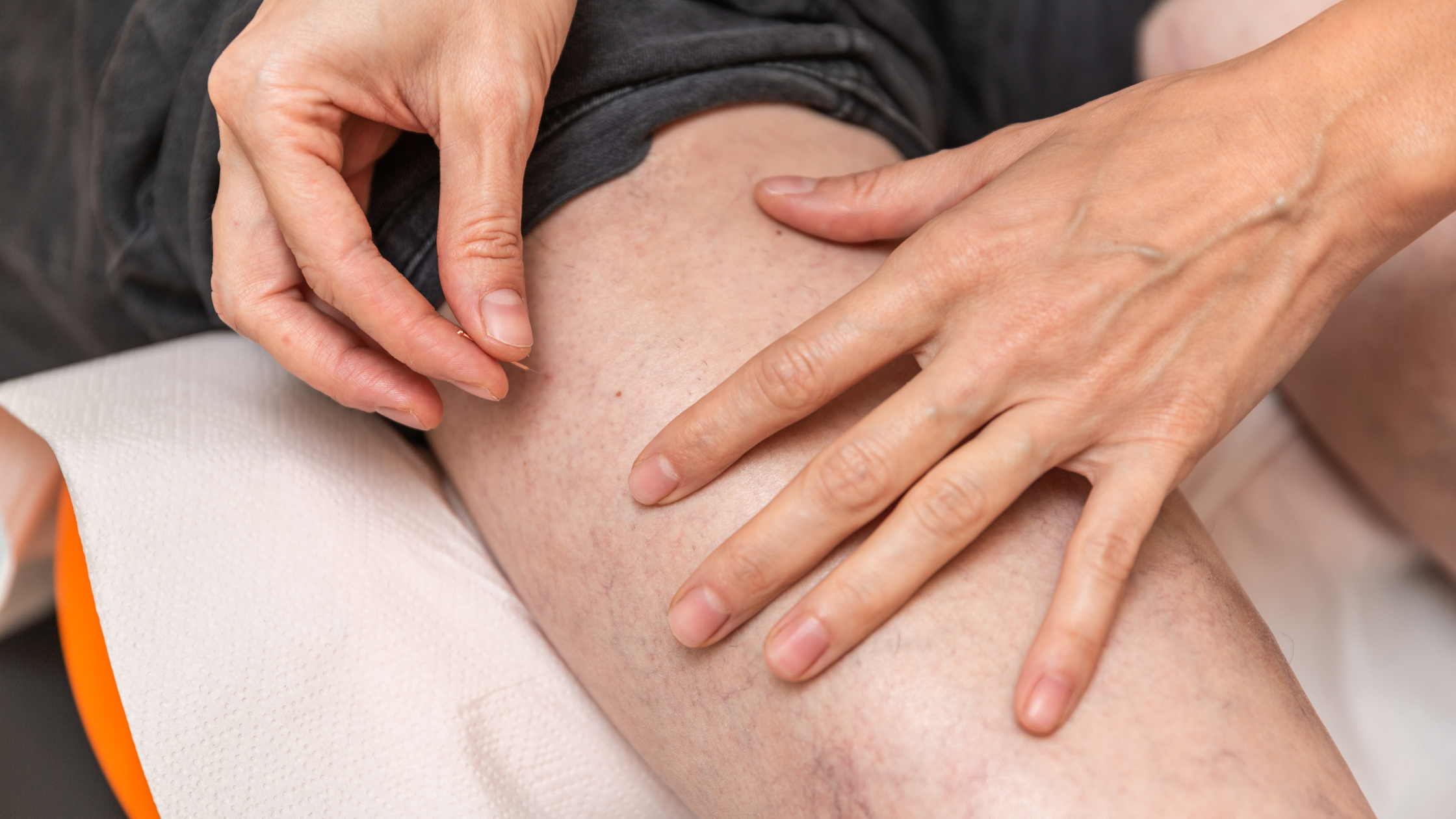
Dry needling is a technique that involves the use of acupuncture needles but applied in a different way and with different goals in mind. The needles range in size from 20mm all the way up to 80mm and are all extremely thin – so much so that they often don’t result in bleeding. The needles are all single use and are applied directly to the skin. So how do dry needles work?
First and foremost, dry needles increase blood flow around the areas they are inserted. Research indicates that blood flow to our tissues is often reduced in the presence of pain and injury. In addition, if a muscle is in a state of spasm or is under a state of contraction, the movement of blood in the muscle will be reduced. Increasing blood flow has many benefits. It allows for the transport of nutrients and oxygen to the tissues, which are both necessary not just for normal tissue function but also for tissue repair. It also allows for the removal of waste products from the affected area. When they are not removed, waste products can increase the sensitivity of the nerves in the area producing more pain and also changing the chemical environment to negatively impact muscle function.
Dry needles also influence the nervous system. In the presence of injury, the electrical activity of the injured site is often altered making the muscles around the area behave differently. In addition, our body will increase the sensitivity of the injured area by increasing the alertness of the nerves in the area for protection. Dry needles inserted around the injured site can reduce the electrical activity of certain points in the muscle, which helps to normalise the tone (tension) of the area. This also reduces the likelihood of spontaneous electrical activity in the area which can cause muscle spasms and cramps. Dry needling has also been shown to reduce the concentration of some neurotransmitters associated with pain. Neurotransmitters are chemical messengers that activate certain pathways and responses in our nervous system. Reducing the concentration of pain specific neurotransmitters (substance P, some cytokines and interleukin) causes a reduction in pain signals. Dry needles have also been shown to stimulate the release of beta-endorphin which is a powerful morphine-like substance produced in the nervous system that acts like pain medications. These nervous system based changes have multiple benefits including pain relief, restoring normal sensitivity of the area, and importantly they allow us to comfortably perform rehabilitation exercises.
After a session of dry needling, some people experience a mild dull ache or increase in warmth around the area that has been needled. These sensations are usually due to the increase in blood flow to the area as described above and are short lived. In most instances, more than one session of dry needles is recommended to achieve the desired effects.